
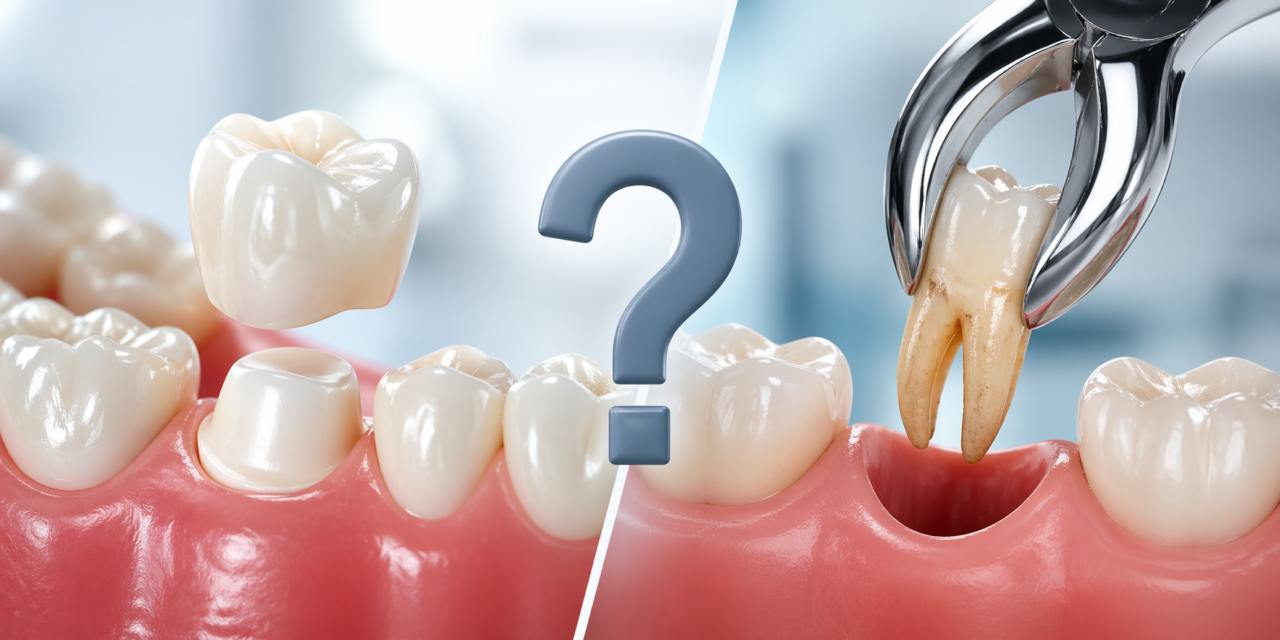
One of the most difficult conversations in dentistry is deciding whether a tooth should be saved or removed. Patients often come in expecting a clear answer, but the decision is rarely based on a single factor. In many cases, the tooth is already at a stage where both options are possible but only one is reliable in the long run.
This is where confusion begins. If a tooth can still be treated with a crown, why would extraction ever be considered? And if removal is suggested, does it mean the tooth could not have been saved earlier?
For patients visiting a dental clinic in Issaquah, understanding how this decision is made helps remove uncertainty and makes the treatment plan easier to accept.
By the Time This Decision Comes Up
The choice between a crown and extraction does not arise at the early stage of a dental problem. By the time this conversation happens, the tooth has usually gone through a significant level of damage.
This may include:
- deep decay that has affected most of the structure
- cracks that have extended beyond the visible surface
- repeated treatments that have weakened the tooth
- internal infection that has compromised stability
At this point, the question is no longer just “Can this be fixed?”
It becomes: “Will this tooth hold up over time if we try to save it?”
What Dentists Actually Evaluate
The decision is not based on how the tooth looks from the outside or how much pain it is causing. A tooth can appear manageable but still be structurally unreliable.
A dentist evaluates:
- how much healthy tooth structure remains
- whether the tooth can support a crown securely
- the depth and direction of any cracks
- whether infection has affected surrounding areas
- how the tooth will handle daily chewing pressure
These factors determine whether the tooth can function predictably after treatment. This is the key difference between a temporary fix and a long-term solution.
When a Crown Is a Suitable Option
A crown is considered when the tooth still has enough structure to be reinforced. Even if the tooth is damaged, it may still be stable enough to support full coverage.
In such cases:
- the remaining structure can hold a restoration
- the damage is contained within a manageable area
- the tooth can handle pressure once reinforced
Here, the goal is to protect what remains and extend the life of the tooth. For patients seeking dental treatment, this is often the preferred outcome when the tooth is still viable.
When Extraction Becomes the Safer Choice
There are situations where saving the tooth may not provide a predictable result. Even if a crown can technically be placed, the underlying structure may not support it for long.
Extraction is considered when:
- too much of the tooth structure is lost
- cracks extend below the gum line
- infection has spread beyond the tooth
- the tooth cannot handle normal function even after treatment
In these cases, attempting to save the tooth may lead to repeated problems. Removing it becomes the more stable option.
Why Delay Changes the Outcome
There are many cases where a tooth is initially borderline, meaning it could be saved with proper treatment. However, delaying care often shifts the balance.
Over time:
- cracks deepen
- infection progresses
- remaining structure weakens further
A tooth that could have been saved earlier may eventually require removal. This is often when patients begin seeking urgent dental care, especially when symptoms start interfering with normal activities.
In more advanced cases, the situation may escalate to emergency dental care, where immediate action is needed to control pain or infection.
Access to Timely Evaluation in Issaquah
One of the most important factors in these decisions is timing. Being able to get a tooth evaluated early allows more options to remain available.
Patients often look for ways to be seen quickly, whether through flexible scheduling or options similar to walk in dental care or same day dental services. This kind of access helps prevent borderline cases from becoming non-restorable.
At NW Emergency Dentist, Dr. Prabhjot Sidhu regularly evaluates teeth at this decision stage. In many cases, early assessment allows the tooth to be preserved, while delayed visits often limit the available options.
Understanding the Decision Clearly
The choice between a crown and extraction is not based on preference. It is based on whether the tooth can function reliably after treatment.
Saving a tooth is always considered first. But when long-term stability is no longer possible, removal becomes the more predictable and safer option. Recognizing this distinction helps patients move forward with clarity instead of hesitation.
How the Final Decision Is Made in Practice
Once the condition of the tooth is assessed, the decision is based on one key question:
Will this tooth remain stable after treatment, or is it likely to fail again?
This is where clinical judgment becomes important. Two teeth may look similar on the surface but behave very differently over time.
A dentist considers:
- whether the remaining structure can hold a crown securely
- if the tooth will withstand daily chewing without breaking
- whether the surrounding bone and tissue can support it
- the likelihood of needing repeated treatment in the future
If the answer points toward long-term stability, saving the tooth is preferred. If not, extraction is recommended to avoid ongoing issues.
Dr. Sidhu’s Approach to Borderline Cases
Dr. Prabhjot Sidhu often evaluates cases where the decision is not immediately obvious. These are situations where the tooth is still present, but its future is uncertain.
Instead of focusing only on what can be done, the focus is on what will last.
In borderline cases, the evaluation includes:
- how much support the tooth has left
- whether reinforcement will truly stabilize it
- if treatment will solve the problem or only delay it
If saving the tooth offers a predictable outcome, that path is chosen. If not, extraction is considered to prevent repeated discomfort and complications. This approach helps patients avoid short-term fixes that lead to long-term problems.
When the Situation Becomes Time-Sensitive
There are times when the decision cannot be delayed. As damage progresses, the condition may shift from manageable to urgent.
This may happen when:
- pain increases suddenly
- swelling develops around the tooth
- chewing becomes difficult
- the tooth structure weakens further
At this stage, patients often seek urgent dental care, especially when the discomfort begins affecting daily routine. If the condition continues to worsen, it may require emergency dental care to control infection or prevent further damage.
In some cases, what could have been a planned crown may turn into an emergency tooth extraction due to progression.
How Access to Care Influences the Outcome
The difference between saving and removing a tooth often comes down to how early it is evaluated.
Patients who are able to get timely care usually have more options. Those who delay due to scheduling or availability often return when the condition has already progressed.
Access to a dental clinic in Issaquah that can accommodate patients without long waiting periods helps reduce this gap. Many patients look for flexible options similar to same day dental services near me or walk in dental care near me when they realize the issue cannot be postponed further.
At NW Emergency Dentist, timely evaluation allows patients to understand their condition clearly and choose the most appropriate treatment before options become limited.
When to Seek Evaluation
It is important to have the tooth assessed if:
- discomfort continues or returns frequently
- the tooth feels weaker than before
- there is a history of repeated treatment on the same tooth
- chewing pressure causes noticeable sensitivity
Even if the symptoms are mild, they may indicate that the tooth is approaching a decision stage.
For patients in Issaquah, NW Emergency Dentist is located at:
5006 E Lake Sammamish Pkwy SE, Issaquah, WA 98029
(425) 391-7645
Early evaluation helps determine whether the tooth can still be preserved or if removal is the more reliable option.
FAQs
Can a tooth always be saved with a crown?
No. A crown works only if enough healthy structure remains to support it.
Why would extraction be recommended if the tooth is still present?
Because presence does not guarantee stability. The decision is based on long-term function.
Is it better to try saving the tooth first?
If the outcome is predictable, yes. If not, repeated treatments may cause more problems.
How quickly should I decide?
Delaying the decision can reduce available options, especially if the condition is progressing.
Conclusion
The decision between a crown and extraction is based on long-term predictability, not just immediate repair. Evaluating the tooth at the right time helps preserve options and avoid complications. Access to timely dental treatment in Issaquah allows patients to make informed decisions with confidence.