
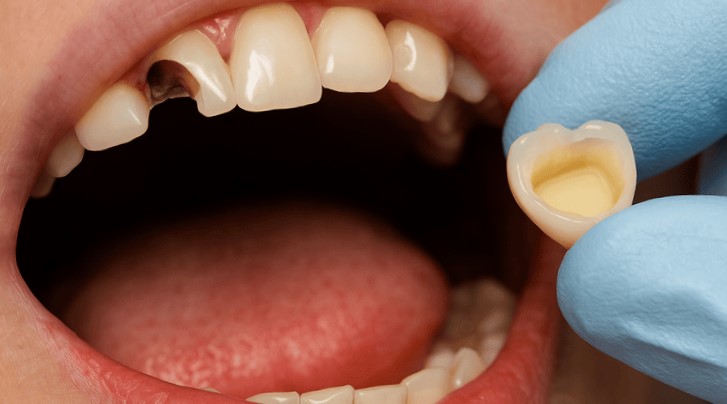
You’re biting into a soft sandwich or sipping your morning coffee when suddenly, you feel something unusual in your mouth. A hard piece. A gap. A little discomfort. That’s when it hits you: you’re filling or crown has come loose or fallen out.
While this isn’t typically a life-threatening emergency, it’s absolutely a dental emergency. Ignoring it can expose your tooth to sensitivity, damage, or infection.
So what should you do next?
Let’s walk through the essential steps and when it’s time to call in the experts at Sunrise Dental.
Understanding Fillings and Crowns: Why They Matter
Both fillings and crowns serve a protective function.
- Fillings are used to restore small-to-moderate areas of decay or damage.
- Crowns are used to cap or cover damaged or root canal-treated teeth.
When either one falls out, your natural tooth structure is left exposed and vulnerable. Over time, bacteria, pressure, and food particles can worsen the condition, possibly requiring more invasive treatment like a root canal or even an extraction.
Why Do Fillings or Crowns Fall Out?
There are several reasons why this can happen:
- Chewing on hard or sticky foods (candies, ice, popcorn etc.)
- Tooth decay underneath the crown or filling
- Natural wear and tear over time
- Bruxism (grinding your teeth at night)
- Poor fit or bonding failure
- Accidental trauma to the face or jaw
Whatever the reason, time is now of the essence. Here’s what to do immediately.
Step-by-Step: What to Do When It Happens?
- Stay Calm and Remove the Filling or Crown (If Still in Your Mouth)
Don’t panic. This is a common dental issue, and it’s usually treatable if you act quickly. If the crown or filling is loose but still in your mouth, carefully remove it to avoid swallowing or choking on it.
- Check the Tooth and Crown/Filling
Gently rinse your mouth with warm salt water. If you still have the crown or filling, rinse it as well. Examine your tooth in a mirror to assess:
- Is there pain or sensitivity?
- Is there bleeding or swelling?
- Is the crown intact or damaged?
If there’s intense pain or signs of infection, you’ll need emergency dental care.
- Use Temporary Dental Cement (Only if Necessary)
You can purchase temporary dental cement from a pharmacy. This is a temporary solution to protect the exposed tooth until you can see a dentist. If using a crown:
- Dry the crown and the tooth surface
- Fill the crown with the temporary adhesive
- Gently place it back over the tooth
- Bite down to seat it properly, then remove excess cement
Important: Do NOT use household glue or superglue—it’s toxic and damages dental tissue.
What NOT to Do?
- Don’t ignore the issue—waiting too long can lead to decay or infection.
- Don’t chew on that side of your mouth.
- Don’t try to force the crown back into place if it doesn’t fit smoothly.
- Don’t delay treatment—the longer you wait, the more complicated it gets.
When to Contact Your Dentist?
You should contact your dentist as soon as possible, even if there’s no pain. At Sunrise Dental, we recommend seeing a dentist within 24–48 hours of a lost crown or filling to prevent further damage.
If you’re experiencing any of the following, seek immediate care:
- Intense or throbbing pain
- Swollen gums or jaw
- Signs of infection (fever, pus, foul taste)
- Cracked or broken tooth beneath the crown
How Sunrise Dental Can Help?
At Sunrise Dental, we specialize in emergency restorative care. Whether your crown needs recementing, replacement, or you need a brand-new filling, we ensure same-day or next-day appointments for urgent cases.
Our approach includes:
- Digital diagnostics to assess damage beneath the surface
- Custom-designed crowns for long-term comfort and durability
- Tooth-colored fillings that match your natural enamel
- Pain management solutions including sedation if needed
- Preventive evaluation to check for underlying issues
Can You Always Reuse a Crown?
It depends. If the crown is still intact, and the tooth structure beneath it hasn’t changed significantly, your dentist might be able to re-cement it.
However, you may need a new crown if:
- It’s cracked or damaged
- The tooth structure has changed
- There’s decay underneath
- The original fit was poor to begin with
How to Prevent Future Crown or Filling Loss?
While accidents happen, you can reduce your risk by:
- Avoiding sticky and hard foods (especially with older restorations)
- Wearing a mouthguard if you grind your teeth at night
- Getting regular dental checkups to spot problems early
- Maintaining good oral hygiene to prevent decay under the restoration
- Addressing minor discomfort early, before it becomes a full failure
Frequently Asked Questions (FAQs)
Q: How long can I wait before seeing a dentist?
A: Ideally, within 24 to 48 hours. Delaying may lead to decay, infection, or the need for more aggressive treatment.
Q: What should I eat if I’ve lost a crown or filling?
A: Soft foods like mashed potatoes, yogurt, smoothies, or soup. Avoid hot, cold, spicy, or crunchy items until your tooth is treated.
Q: Can I leave a lost filling untreated?
A: No. Even if it feels okay, the exposed area is vulnerable to decay, temperature sensitivity, and breakage. Always get it evaluated.