
Tooth pain is never something you should ignore, especially when it could indicate nerve damage. Your dental nerves are essential for sensation, and when something compromises them, the effects can go far beyond temporary discomfort. From chronic pain to tooth loss and infection, untreated nerve damage can have serious consequences.
In this blog, we’ll help you understand what tooth nerve damage really is, the signs to watch for, and what treatments are available—so you can act quickly and protect your smile with the help of NW Emergency Dentist.
What Is Tooth Nerve Damage?
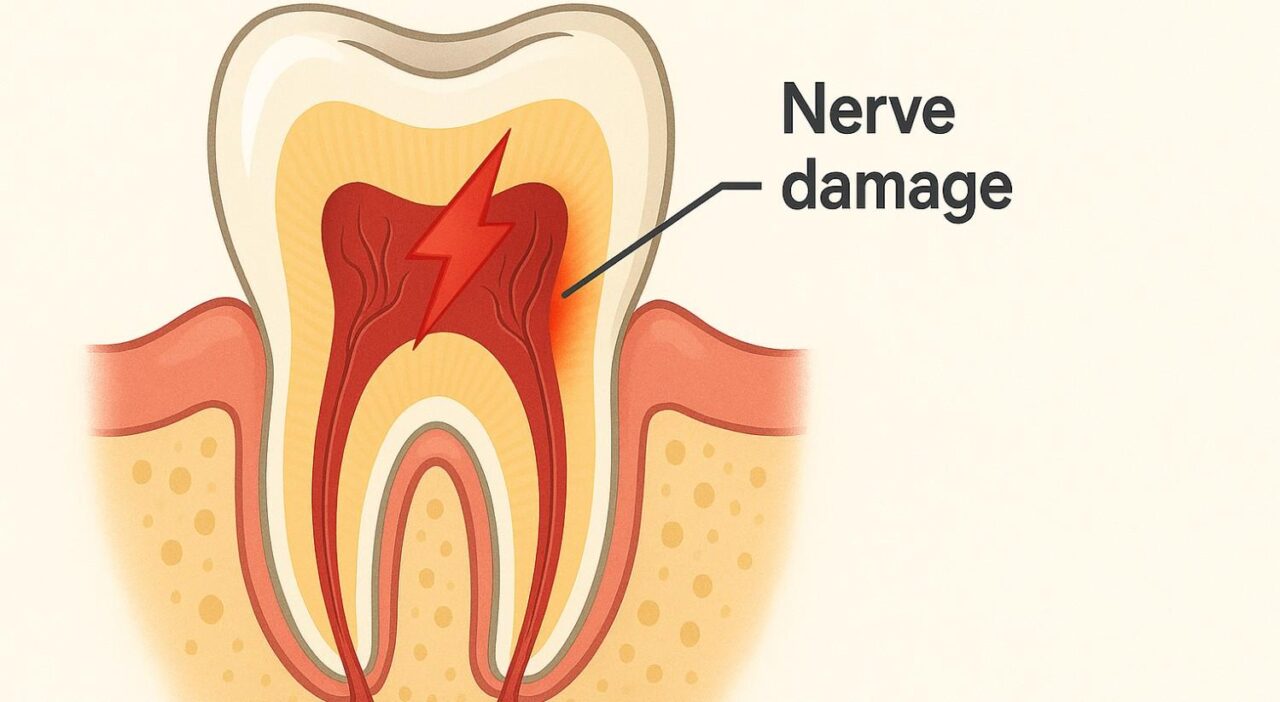
To understand nerve damage in a tooth, it’s helpful to know the basic anatomy of your teeth. Each tooth has three main layers: enamel (the hard outer surface), dentin (a softer layer underneath), and the pulp, which is the innermost layer containing nerves and blood vessels. The pulp is what keeps your tooth alive.
When bacteria from decay, injury, or pressure reach the pulp, it can inflame or infect the nerve tissue. If left untreated, this can result in necrosis (death) of the pulp, leading to severe complications.
Common Causes of Tooth Nerve Damage
Tooth nerve damage can occur for several reasons, many of which are preventable:
- Deep Cavities: Untreated cavities can eventually reach the pulp and irritate or infect the nerve.
- Dental Trauma: Accidents, sports injuries, or even biting something hard can crack a tooth and expose the nerve.
- Multiple Dental Procedures: Repeated fillings or drilling in the same area can stress the tooth and damage the nerve.
- Bruxism (Teeth Grinding): Constant pressure from grinding can inflame or compress the nerve.
- Advanced Gum Disease: As gum disease worsens, it can expose the tooth roots and damage the nerve over time.
- Cracked or Broken Teeth: These provide a direct path for bacteria to enter the tooth and affect the nerve.
Recognizing the Early Signs of Nerve Damage
Early detection is key to saving the tooth and minimizing pain. Watch for these warning signs:
- Increased Sensitivity: A sharp reaction to hot, cold, or sweet foods may be your nerve responding to irritation.
- Sharp or Throbbing Pain: Pain that comes and goes, or worsens when lying down, is often nerve-related.
- Pain While Chewing: This may suggest inflammation of the pulp.
- Discoloration: A tooth turning gray or darker could be a sign that the nerve inside is dying.
- Swollen Gums Near the Tooth: This may indicate infection forming around the root.
Advanced Symptoms: When the Nerve Is Dying or Dead
If nerve damage progresses, symptoms can become more severe:
- Numbness: If a tooth stops hurting, it may mean the nerve has died.
- Persistent Bad Taste or Odor: Infection inside the tooth can produce pus and a foul smell or taste.
- Abscess or Gum Boils: These are serious infections at the root tip and must be treated promptly.
- Swelling in the Face or Jaw: May indicate the infection has spread.
- Fever: A clear signal that your body is fighting an infection.
These symptoms demand immediate dental care.
Why Prompt Diagnosis Matters?
Delaying treatment can result in long-term damage, including loss of the tooth, bone infections, or even systemic health issues. A quick diagnosis can mean the difference between saving and losing the tooth—and controlling pain before it worsens.
How Dentists Diagnose Nerve Damage?
At NW Emergency Dentist, we use several tools to confirm nerve damage:
- Visual Examination: Checking for cracks, discoloration, or visible decay
- Percussion Test: Tapping the tooth can reveal inflammation
- Thermal Test: Applying cold or heat to assess nerve sensitivity
- X-Rays: Detect deep cavities, root infections, or bone loss
- Pulp Vitality Testing: Measures how the nerve responds to stimuli
Treatment Options for Nerve Damage
The most effective treatment depends on the extent of damage:
- Root Canal Therapy: The go-to solution when the pulp is infected or inflamed. The damaged tissue is removed, and the area is cleaned and sealed.
- Tooth Extraction: If the damage is too severe, the tooth may need to be removed.
- Antibiotics: Prescribed if infection is present.
- Restorative Options: After treatment, a crown or implant may be needed. Consider Dental Implants or All-on-4® for long-term restoration.
What Happens If Nerve Damage Is Left Untreated?
Ignoring nerve damage isn’t just risky—it can be dangerous. You could experience:
- Infection spreading to the jaw or neighboring teeth
- Bone loss from abscess formation
- Increasing, chronic pain
- Tooth loss and misalignment
- In rare cases, sepsis from the infection entering the bloodstream
When to See an Emergency Dentist?
Seek emergency dental care if you experience:
- Persistent tooth pain or numbness
- A cracked or broken tooth from injury
- Swelling, pus, or foul taste near the gums
- Fever in combination with oral pain
Visit our Emergency Dental Services page for immediate assistance.
How NW Emergency Dentist Can Help?
At NW Emergency Dentist, we offer:
- Same-Day Appointments
- Advanced Diagnostic Tools (like digital X-rays)
- In-House Root Canal Expertise
- Gentle, Comfort-First Care for anxious patients
Need urgent help? Contact us now and get expert treatment from compassionate professionals.
Conclusion
Tooth nerve damage is serious—but also highly treatable when caught early. Knowing the signs can save your tooth, ease your pain, and protect your health. Don’t wait until symptoms escalate.
If you’re noticing sensitivity, pain, or discoloration, reach out to NW Emergency Dentist today.
Book your appointment and take the first step toward a pain-free, healthy smile.