
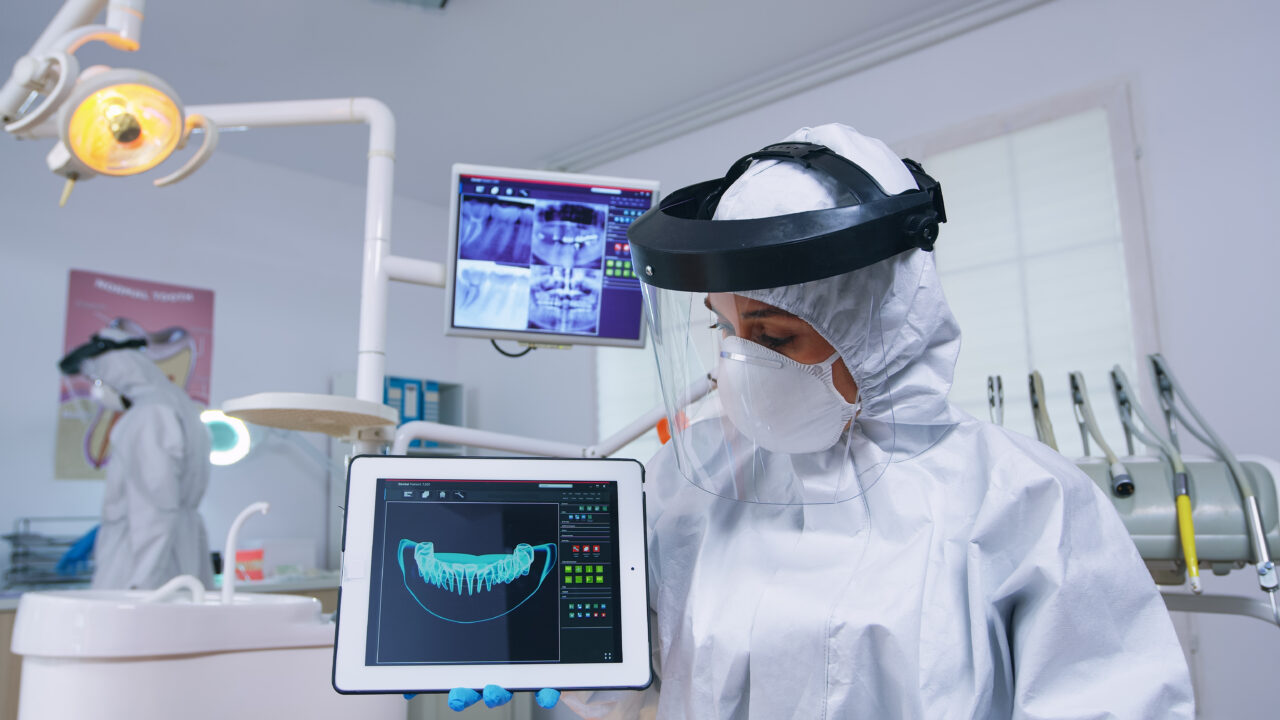
Many types of tooth damage don’t show up clearly on the surface. A tooth can look intact while a crack, early decay, or internal change is developing underneath. This is where modern dental imaging becomes useful.
Today’s imaging tools give a dentist a more detailed view of the tooth and surrounding structures than a visual exam alone. Instead of waiting for symptoms to become obvious, these tools help detect problems earlier and with greater precision.
Understanding how modern imaging works helps explain why it is often recommended even when teeth seem fine.
What “Modern Dental Imaging” Means
Modern imaging in dentistry goes beyond traditional film X-rays. It includes:
- Digital X-rays (clearer images with lower radiation)
- 3D imaging (CBCT) for detailed views of roots and bone
- Intraoral cameras to visualize surfaces and small changes
Each tool serves a specific purpose, but together they provide a more complete picture of oral health.
Why Tooth Damage Is Often Hard to See
Tooth damage can begin in places that are not visible during a routine check. Common examples include:
- decay between teeth
- cracks that extend below the surface
- damage beneath existing fillings or crowns
- changes near the root of the tooth
Because these areas are hidden, problems may not be noticed until they become larger or start causing discomfort. Modern imaging helps uncover these issues before they progress.
Detecting Early Tooth Decay
One of the most common uses of digital imaging is identifying decay at an early stage.
Early decay:
- may not be visible to the eye
- may not cause pain
- can develop between teeth
Digital X-rays allow dentists to spot these small areas before they spread deeper into the tooth. Early detection often means simpler treatment and better preservation of the tooth structure.
Identifying Cracks and Structural Weakness
Cracks in teeth can be difficult to detect because they are often very fine and may not be visible from the outside.
Modern imaging helps:
- reveal deeper cracks not visible on the surface
- assess how far a crack has extended
- evaluate whether the tooth structure is still stable
This is especially important for teeth that feel sensitive or painful when biting, even if they appear normal.
Evaluating Previous Dental Work
Teeth that already have fillings, crowns, or other restorations need to be monitored over time.
Imaging helps detect:
- decay forming under a filling
- gaps or wear around a restoration
- changes beneath crowns
These issues may not be visible during a standard exam, which is why imaging plays an important role in long-term dental care.
Why Early Detection Makes a Difference
When tooth damage is identified early, it is usually easier to manage. Smaller issues can often be treated with less invasive procedures.
Without imaging, some of these problems may go unnoticed until they:
- cause pain
- affect chewing
- require more extensive treatment
In some cases, delayed detection can lead to situations that eventually require emergency dental care.
Building a More Accurate Diagnosis
Modern imaging allows dentists to combine what they see clinically with what is happening beneath the surface. This leads to more accurate diagnoses and better treatment planning.
Rather than guessing or waiting for symptoms to worsen, dentists can make informed decisions based on clear visual data.
Modern dental imaging does more than just show what is hidden—it helps guide decisions about treatment. When combined with a clinical exam, imaging gives a clearer understanding of how far a problem has progressed and what approach will be most effective.
How Imaging Guides Treatment Decisions
When a patient reports discomfort or when a tooth appears questionable, a dentist uses imaging to confirm what is happening below the surface.
For example, imaging can help determine:
- whether decay is shallow or has reached deeper layers
- if a crack is limited to the surface or extends into the tooth
- whether the root or surrounding bone is affected
This information allows the dentist to choose the right treatment instead of relying only on visible signs or symptoms. Accurate diagnosis leads to more predictable outcomes and helps avoid unnecessary procedures.
When Advanced Imaging Becomes Important
While routine imaging is often sufficient, there are situations where more detailed tools are needed.
These include:
- persistent tooth pain without a clear cause
- evaluation before or after root canal treatment
- suspected cracks that are not visible
- assessing bone structure around teeth
In such cases, advanced imaging such as 3D scans provides a more detailed view that cannot be obtained with standard methods. This level of detail helps identify issues that might otherwise remain undetected.
Preventing More Complex Dental Problems
One of the biggest advantages of modern imaging is prevention. By identifying problems early, dentists can intervene before the condition becomes more serious.
Early detection helps:
- treat decay before it spreads
- manage structural issues before they worsen
- preserve more of the natural tooth
Without imaging, some conditions may continue to develop silently. Over time, this can lead to pain or damage that requires more involved treatment.
In certain situations, delayed diagnosis may result in symptoms that require urgent dental care, especially if discomfort becomes severe.
When Immediate Evaluation Is Needed
There are times when imaging is used to assess more urgent symptoms.
These may include:
- sudden tooth pain that does not have an obvious cause
- swelling near the gums or jaw
- discomfort that increases quickly
In these situations, imaging helps determine whether there is infection, structural damage, or another issue that needs prompt attention.
If a serious condition is identified, timely treatment can help prevent complications that might otherwise require emergency dental care.
Local Evaluation and Clinical Insight
For patients experiencing dental concerns, visiting a dentist in Issaquah allows for a thorough evaluation that may include modern imaging when necessary. Clinics such as Sunrise Dental of Issaquah use these tools to assess hidden damage and monitor changes over time.
At NW Emergency Dentist, Dr. Prabhjot Sidhu often uses advanced imaging to identify problems that are not visible during a standard exam. In many cases, this approach has helped detect issues early and prevent more serious complications. Accurate imaging supports better diagnosis and more effective treatment planning.
Are Modern Dental Imaging Methods Safe?
Modern dental imaging is designed with safety in mind. Digital X-rays use lower radiation levels compared to older methods, and advanced imaging is only recommended when necessary. Protective measures are used during imaging to ensure minimal exposure.
FAQs
What is the difference between digital X-rays and 3D imaging?
Digital X-rays show detailed 2D images, while 3D imaging provides a more comprehensive view of teeth and surrounding structures.
Do I need imaging if I have no pain?
Yes, some dental problems develop without symptoms and can only be detected through imaging.
Can imaging detect cracks in teeth?
Yes, certain types of imaging help identify cracks that are not visible during a regular exam.
Is modern dental imaging safe?
Yes, it uses low radiation levels and is recommended only when needed.
Conclusion
Modern dental imaging plays a key role in detecting tooth damage that cannot be seen during a routine exam. By providing a clearer view of hidden areas, it helps dentists identify problems early and plan appropriate treatment. Including imaging as part of regular dental care supports better long-term oral health and helps prevent avoidable complications.